- Home
- Artificial Intelligence
- AI Flight Assistants for Real-Time Flight Updates, Alerts
AI Flight Assistants for Real-Time Flight Updates, Alerts
- January 13, 2026
- Rajib Kar
- Artificial Intelligence, Gen AI, Guest Experience
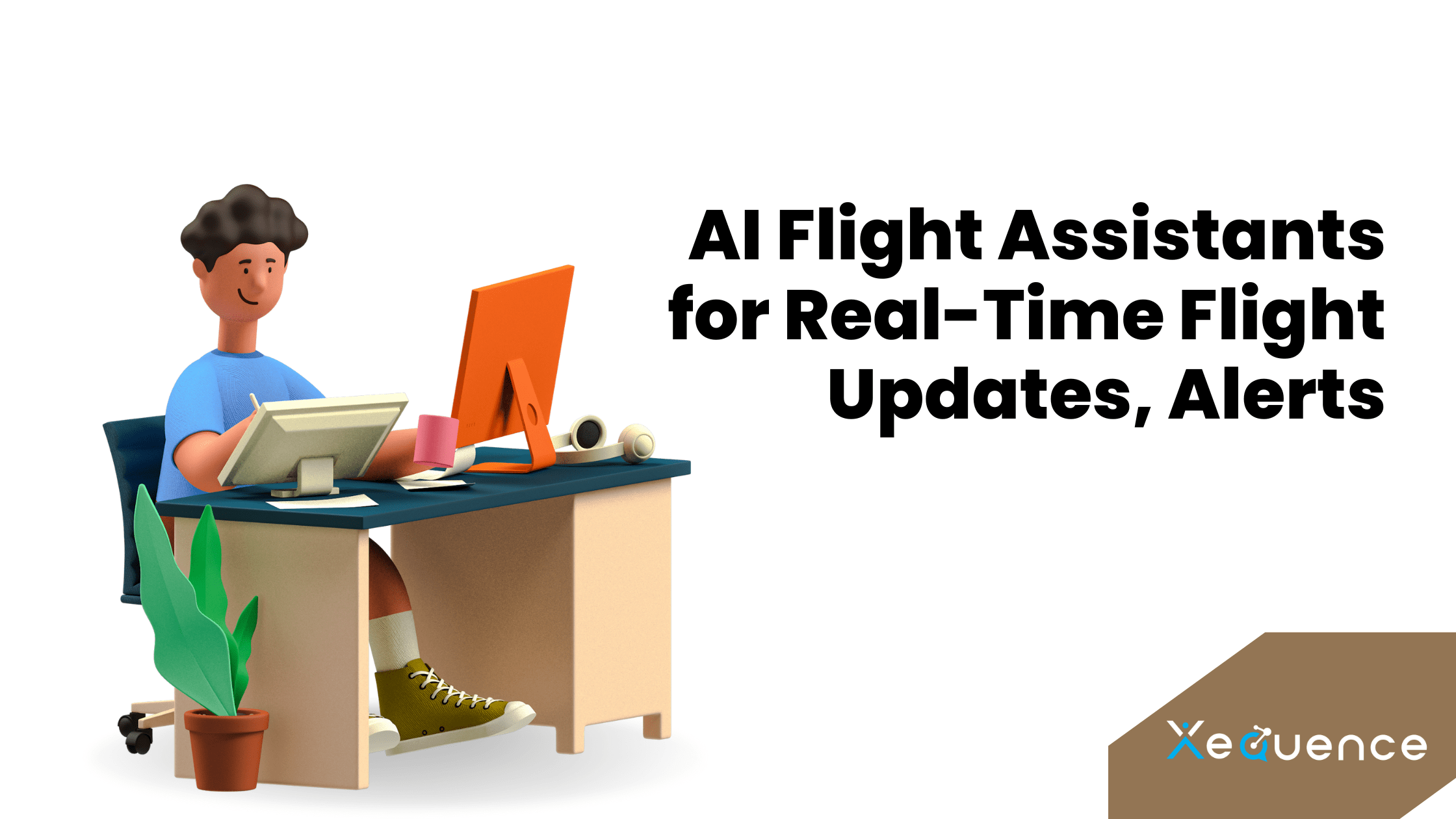
AI Flight Assistants for Real-Time Flight Updates & Alerts | Smart Travel Tech
Nowadays air travel is a preferred mode of travel, as it brings people, cultures, and businesses together across borders. The arrival of AI flight assistants is revolutionizing the ways people savor the skies—from real-time flight information, timely warnings, and customized services. Such smart products are transforming the technology of aviation: passengers have always been a step ahead of the rest, on the ground and in the air. AI flight assistants refer to software systems intended to help travelers and airlines by automating, predicting, and processing natural languages. They access live air pilot flight information streams, weather services, and airline databases with the purpose of performing more complicated interpretations and providing actionable information in seconds.
The concept of AI Flight Assistants
AI travel assistants operate on both built-in platforms—they can be used by means of apps, smart devices, and in-flight screens. It could be reserving the connection that was missed or reseating preferences. AI flight assistants can process travel information on the fly and reply to it in written or verbal form in chatbots or voice recognition. Such systems have already been implemented by airlines such as Delta, United, and Qatar Airways, thus availing the customers of real-time and correct travel details instantly without the need to line up at the service desks.
Real-Time Flight Updates
The provision of real-time flight updates has been a critical factor in contemporary aviation and any inconvenience can spread indefinitely in flight schedules. Historically, the flight information boards or the gate announcements might be delayed and the passengers may have no idea until the last second.
That is transformed with the help of AI flight assistants that constantly measure conditions that influence the status of flights, such as the congestion of air traffic, weather changes, mechanical controls, and runways. Per hour, as compared to the established times in old systems, AI-based platforms receive live telemetry and anticipatory analytics, which allow detecting the deviations a few minutes before the official announcement. Indicatively, the Flight Delay Prediction model developed by Google operates on the past and real-time data to predict the delay with more than 85 percent accuracy and therefore proactively notify the passengers through its mobile application.
Not only does this amount of responsiveness eliminate uncertainty but also enables travelers to make quick decisions. In estimating the new arrival times to forecasting the changes in the gates, AI provides transparency that improves confidence and the convenience of both passengers and airlines.
Alerts and Notifications
More than real-time flight updates, AI flight assistants are a full suite of alerts based on the trip of a specific traveler. These live alerts are much better than the delayed messages. Common alert types include:
- Flight status now alerts to passengers about boarding and then changed or delayed gates in real time.
- Baggage tracking alerts: Notify users regarding the baggage position or possible difficulties with it.
- Weather and disruption notices: Warn flyers about extreme weather conditions that may impact the routes or layovers.
- Connection alerts: Recommend the rebooking or alternative routes in the case of a risky connecting flight.
- Check-in and security real-time: Display real-time wait time at the check-in counters and security checkpoints.
As a case in point, an AI system may estimate that a connecting plane will take off earlier than a traveler, in which case it could suggest an alternative option, in addition to reissuing boarding passes or booking access to a lounge to make this more comfortable. This tactical move will minimize frustration and introduce a new level of service reliability.
User Satisfaction Statistics
The statistics provided by researchers in the aviation market indicate a picture of increased user satisfaction with AI-based travel services. In a survey that the organization International Air Transport Association (IATA) released in 2025, it was reported that AI-based flight update systems increased noticeable enhancements to the travel experience among 74% of respondents who had utilized this kind of service.
Likewise, a report says passengers who were notified of issues in real-time by AI alerts were 40 times less inclined to miss flights owing to unnoticed delays or switches of terminals. Even airlines record quantifiable gains: Delta Air Lines reported that its smart assistant, called Delta Sync AI, which notifies customers about all flight-related updates in advance, helped the firm decrease the number of customer service queries by 20%.
The combination of precision and customization offers excellent results in passenger satisfaction rates and retention indicators. By providing the users with timely updates and factors that guide as required, frustration levels are reduced, and the trust that the airline is providing the required services is enhanced.
Future of AI in Aviation
The use of AI in the aviation sector will only grow exponentially in the coming years. New technologies like generative artificial intelligence, machine learning-driven disruption management, and predictive fleet analytics will further enrich situational awareness of the passengers and operators.
In the foreseeable future, AI flight assistants will not limit their activities to updates; they will also learn how to solve the problem on their own. Imagination See boarding passes automatically adjusted to rebooked flights, personally tailored push notices with suggestions on nearby dining options during layovers, and voice assistants that provide accurate guidance from gate to gate in airports in augmented reality.
At a greater level, AI will also be incorporated into air traffic management systems, enabling coordinated updates of ground activities and pilots as well as passengers—reducing the communication gap to a minimum. These assistants, as they advance, will be a perfect blend of efficiency and compassion; they will be able to provide more than construction of facts, and they will be able to offer consolation.
The airlines, however, need to strike a balance between innovation and ethics and privacy of data without exposing the information of travelers to danger. One of the main factors that will maintain trust and uptake will be transparency in AI collection and utilization of data.
Conclusion
The AI flight assistants are transforming air travel into an entirely new experience—they are making the stress of delays, cancellations, and unpredictability into a hassle-free, needless, personalized experience. These solutions can be used to transform what passengers can expect of the contemporary travel aviation services by offering predictive feedback, real-time notifications, and personalized information.
The future of aviation will be one of precision, comfort, and confidence in any trip as the use of artificial intelligence keeps advancing. To a commuter, it is not just convenient but a matter of peace of mind. The formerly inactive traveler is becoming more empowered, informed, and in charge of their travel experience, and that is possible only through AI flight assistants shepherding them over.
Recent Posts
Newsletter
Get regular updates on data science, artificial intelligence, machine
You may also like
Future Trends of AI Travel Assistants in 2026 and Beyond
XequenceAI
March 24, 2026

Shaping the Future of Smart Tourism: AI Travel Assistants
XequenceAI
March 7, 2026

AI Travel Assistants: The New Personal Travel Planners
Rajib Kar
February 21, 2026

5 Things an AI Travel Assistant Can Do in Seconds
XequenceAI
February 11, 2026