- Home
- Artificial Intelligence
- AI vs Human Travel Agents: Who Will Lead the Future of Travel?
AI vs Human Travel Agents: Who Will Lead the Future of Travel?
- December 10, 2025
- Suraj Kumar
- Artificial Intelligence, Hotel Management, Hotel Marketing
Will AI Replace Human Travel Agents?
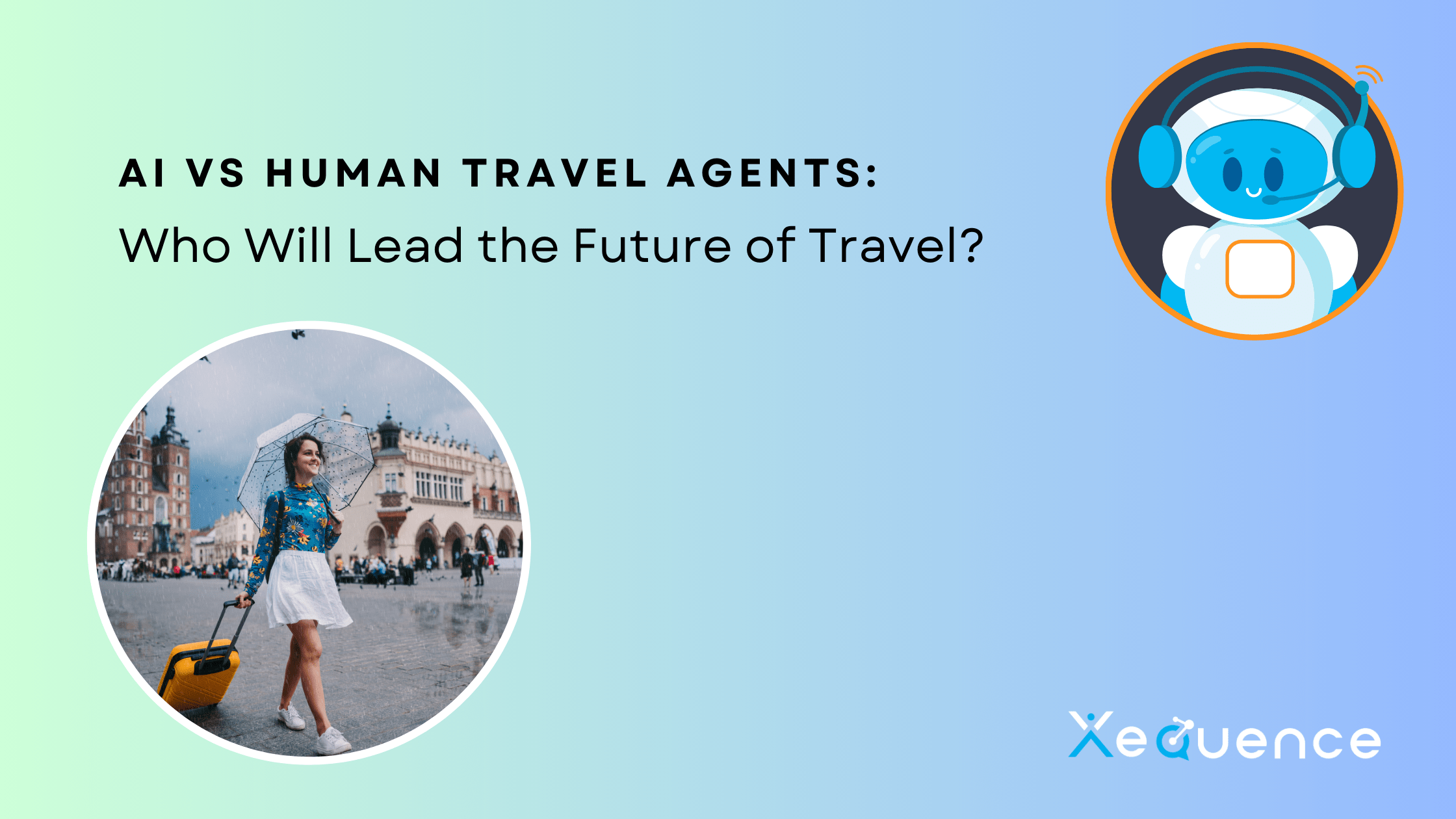
The travel industry has experienced a sea change in the past decade. What used to be highly dependent on human knowledge, intimate phone calls, and agencies has been replaced by digital applications with the use of artificial intelligence. Current travelers demand immediate responses, personalized recommendations, and booking at any time of the day and night. This change leads to a significant question: Who will really win in the new travel economy, AI travel tools or human travel representatives? It is a more complicated question than a winner-takes-all case.
The Emergence of AI in Travel Planning
New AI based applications have completely changed the whole industry science behind dynamic price engine, itinerary composition and customer queries and feedback. The modern AI systems can process large swings of data flight paths and lodgings availability to user evaluations and weather anticipation to ensure that the traveler makes informed selections like never previously experienced.
Efficiency and Speed
The first benefit of AI is its uncontested efficiency. Thousands of options can be processed online by the online booking service and travel apps, and the user is given the refined options in regards to their budget, preferences, and trip history. Such a travel company uses AI-powered recommendation engines to propose destinations or accommodations that align with past preferences. Such a degree of speed and automation has made AI a favored tool in fast and straightforward bookings.
A significant role in the form of real-time support is also occupied by AI chatbots. The bots are 24/7 and address simple questions like baggage regulations, flight schedule and delay, cancellation rules and resolve queries in less time a person can do.
Cost Reductions and Forecasts
The predictive nature of AI has transformed the way tourists make and plan their money. Flight prediction, available offers, and the most optimal time for adding tools assist users to save money. A lot of consumers use automated notifications that suggest whether to book at the moment of time or to wait based on past tendencies and machine learning algorithms to predict variations in prices over time.
Limitations of AI
In spite of its advantages, AI has its weaknesses. Programmed software can have difficulty with complicated schedules that can include multiple destinations, odd requests or urgent situations. AI also does not have the human capacity to interpret emotional signals, detect hidden tastes, or sympathize in the event of a travel disruption that is stressful. AI may be insufficient to satisfy the needs of travelers who strive to find reassurance or apply creative thinking.
The Lasting Value of Human Travel Agents
Although the world is changing, human travel agents have an essential place to play in it—particularly because of those travelers who demand high-touch service, personalization, and expert advice. Many agents are not being replaced; instead, they have modified their workflows by incorporating AI tools to augment personal expertise and integrate it into their workflow.
Customizing products and Customer Care
Human travel specialists are the most effective when it comes to communication and personalization of trips. Captivating questions which will be overlooked by AI: What is your type of atmosphere in a hotel? Are you a fast paced or slow paced sightseeing type? Having a special occasion? These subtle conversations assist agents to create the most personalized travel experience.
They also use professional networks, and they lived experience. The agents travel to destinations, build relationships with hotels, tour operators and follow the trends in travel in real time. This helps them provide advice that is based on practice and not algorithms.
Expert Problem-Solving
Human agents are also exceptional in the field of troubleshooting. In a case of a twist, such as, a missed flight, or a cancelled flight or lost reservation, an agent with experience can step in and in many cases get the problem solved sooner than is possible as a lone traveller fiddles with the multitasking systems. The event during Global disruptions in the recent past, like extreme weather conditions or flight cancellations, most travellers claimed that human operators came in to save their travels and their itineraries.
Satisfaction and Trust among customers
As much as AI tools have been gaining popularity, loyal roots to conventional agents remain very high. According to the surveys often provided by the industry, customers traveling with human agents on more complicated journeys report a higher rate of customer satisfaction, which is explained in large part by individualized treatment, and the feeling of relief that their logistics were taken care of by a professional. This confidence is of vital importance to luxury travel, business travel, group travel, and special events such as honeymoons.
Human Limitations
Human actors do not lack negativity. They may cost more, be less accessible during the non-business hours and be slower in large scale data searching procedures. The quality of service can vary greatly because not all agents determine all kinds of trips.
Who Wins in the New Travel Economy?
Instead of introducing a clear-cut winner, the new traveling economy shows a more cooperative future. AI is quick, operation-driven, and 24/7. Emotional intelligence, subtle personalization and creative problem solving are offered by human agents. More and more thriving travel businesses now combine both to an advantage: by automation through AI, they leave complex or delicate procedures to seasoned employees.
To the traveler, the top option is depending on his or her requirements. The type of trips that could be handled well by the AI-driven booking systems includes quick solo trips, whereas milestone vacations or complex itinerary plans can be approached by human travel professionals. The most potent solutions in the industry will incorporate machine intelligence and human intuition, boosting customer experience to the next level as the industry transforms.
This hybrid future will see the use of AI technology to plan and encounter journeys, as well as experienced travel professionals and the emergence of higher customer expectations influencing the planning and experience of journeys. Regardless of whether a traveler trusts smart algorithms or a personal guide, the purpose is always the same to make people have smooth, memorable, and meaningful travelling experiences in the world that moves so rapidly.
Recent Posts
Newsletter
Get regular updates on data science, artificial intelligence, machine
You may also like
Future Trends of AI Travel Assistants in 2026 and Beyond
XequenceAI
March 24, 2026
Shaping the Future of Smart Tourism: AI Travel Assistants
XequenceAI
March 7, 2026

AI Travel Assistants: The New Personal Travel Planners
Rajib Kar
February 21, 2026

5 Things an AI Travel Assistant Can Do in Seconds
XequenceAI
February 11, 2026