- Home
- Artificial Intelligence
- Over 85% Retention: How OTA Chatbots Are Improving Customer Retention
Over 85% Retention: How OTA Chatbots Are Improving Customer Retention
- November 23, 2025
- Rajib Kar
- Artificial Intelligence, Digital Concierge, Guest Experience
How OTA Chatbots Are Transforming Customer Loyalty
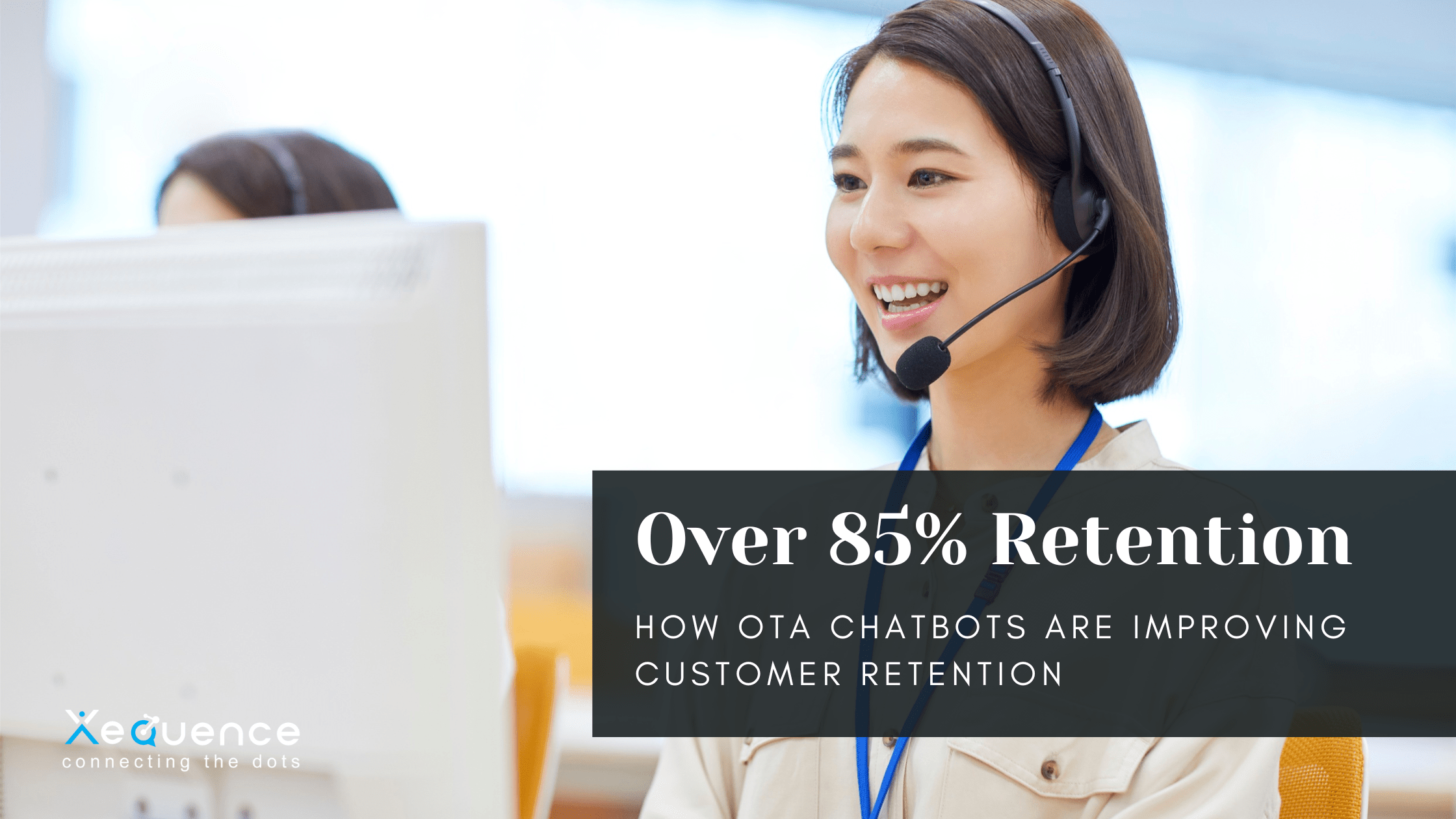
In the current digital-dominant travel market environment, the Online Travel Agencies (OTAs) are leading customer service innovation. What is their secret weapon? OTA chatbots, the AI-based digital assistants, aim at meeting, serving, and maintaining the travellers during the entire journey. With current travelers requiring quicker responsiveness and personalized suggestions, effective OTAs are now looking at chatbots as not only a means of garnering quicker support but also a drastic way of raising customer loyalty; repeat bookings have shot up by as much as 85% with the statistics.
What are OTA chatbots?
OTA chatbots are the conversational AI systems that are installed on online travel sites, booking engines, and messaging apps. These smart bots provide intelligent customer support 24/7 unlike traditional FAQs or fixed forms, because they can process a customer query in a natural language via natural language processing (NLP) and machine learning. Whether handling bookings or providing travel recommendations or as an upselling feature, OTA chatbots can ensure real-time experiences that will keep a user engaged and happy long after their initial booking.
OTA chatbot advantages
- Fast, always-on responses
- Personalized recommendations
- Smooth cross-channel customer care
- Regular brand experience
Simply put, OTA chatbots are the online manifestation of customer support, eliminating wait lines and creating a smooth journey between the initial query and a fully booked trip, which is the main aspect of motivating customer retention.
The Growth of Customer Retention by OTA Chatbots
Customer retention will depend on the value, understanding, and satisfaction that travellers will experience during their travel. OTA chatbots are good on this in a number of ways:
Live-Time, Multichannel Interaction
Chatbots accompany the user in web, application, messenger, and even voice channels, which means that assistance is worthy of a click or a tap. Omnichannel engagement implies that the history, preferences, and open queries of assets are identified in any situation that a customer approaches and provides continuity and removes frustration caused by the need to re-enter all details into the system.
Individualized Service and Suggestions
AI-based chatbots can analyze booking trends, search history, and passenger profile to provide customized travel services or upselling (e.g. hotel upgrade or car rental). With this amount of individual attention, the incentive to switch OTAs will be reduced, and the possibility of returning business will increase.
Effective problem solving and after-sales support
Customers also come back to a brand, which addresses their problems promptly. OTA chatbots are available 24/7 to solve problems, whether that is changing or cancelling an itinerary, or sending boarding passes or rebooking after an inconvenience. Efficient and smooth solutions increase satisfaction and create loyalty.
Follow-Up Marketers and Loyalty Initiatives are automated
In addition to reservations, chatbots release automatic reminders, follow-ups, and personalized deals—keeping travelers connected and inclined to repeat a purchase. Other OTAs also employ chatbots to actively seek feedback, grievances, or special loyalty rewards.
Facilitating Onboarding and Re-engagement
Chatbots reduce customer churn through interactive tutorials and real-time prompts and re-engagement campaigns, prompting both new and existing users to appreciate and incentives available only on the OTA platform.
A Great Ratio
Various case studies and market reports now point out directly to better loyalty metrics being directly tied to AI chatbots. According to a few brands, implementing OTA chatbots early retention rate increases after optimizing their chatbot strategies between 70 and 85%. In a survey, it was mentioned that 80% of the users were satisfied with communication with the Sephora chatbot, which stimulates more and more interactions and purchases.
A factual analysis observed that the chances of returning to a place again are as high as 85 percent when booking services through chatbots through frequent, systematic support.
Real-Life Case Studies: Travel Industry Success Stories
Expedia: Expedia has successfully implemented chatbots in its booking and service channels to answer common queries instantly and hence increasing the number of services, thereby reducing the rate of abandonment, increasing customer satisfaction and influencing repeat bookings.
Booking.com: Booking.com uses AI chatbots to respond to millions of customer inquiries every year, whether they are answering property questions or closing payment-related problems, which leads to the growth of NPS scores and repeat visits.
Sephora (as a cross-industry example): Although it is not an OTA, the Sephora chatbot on Facebook Messenger offers personalized recommendations and booking service – it already achieved 80 percent positive interactions, which encourages other industries, such as travel, to adopt similar experiences.
Problems and drawbacks of OTA Chatbots
- Convoluted Questions: Chatbots are yet to master the multi-faceted, sensitive matters where empathy or even innovative problem-solving is required; so far, the only way to have the finest customer service is to escalate to a human agent.
- Training and Maintenance: Integrity bots will need continuous training and maintenance to learn new slang and regional terms and any relevant customer needs since accuracy and usefulness diminish otherwise.
- Precautions against Over-Automation: Excessive automation, which leaves customers with little or no human assistance, can be irritating to the customers when the escalations are slow and inefficient.
- The big brands have already figured out (by their own failures at times) that a balanced AI-plus-human model provides the best outcome in terms of customer retention and the customer experience.
Conclusion: The Loyalty Engine of Tomorrow
OTA chatbots are transforming the hospitality and travel industry with instant support automation, personal service, and customer relations development, even after the initial bookings. The 85% retention jump was no mere hype, as the genius of the engagements, 24/7 access, and technology that recalls, comprehends, and appreciates the customer were behind it. To gain the maximum loyalty and be seen as an exception in an overcrowded industry, OTAs should invest in a powerful trained artificial intelligence, not a technological one, is a start of growth, a vendor of trust, and memorable experience, one that propels both business expansion and brand loyalty.
Recent Posts
Newsletter
Get regular updates on data science, artificial intelligence, machine
You may also like
Future Trends of AI Travel Assistants in 2026 and Beyond
XequenceAI
March 24, 2026

Shaping the Future of Smart Tourism: AI Travel Assistants
XequenceAI
March 7, 2026

AI Travel Assistants: The New Personal Travel Planners
Rajib Kar
February 21, 2026
5 Things an AI Travel Assistant Can Do in Seconds
XequenceAI
February 11, 2026