- Home
- Artificial Intelligence
- The Rise of Autonomous Coordination Infrastructure: Powering the Future of AI
The Rise of Autonomous Coordination Infrastructure: Powering the Future of AI
- July 10, 2026
- Rajib Kar
- Artificial Intelligence, Business Automation Tools, Technology
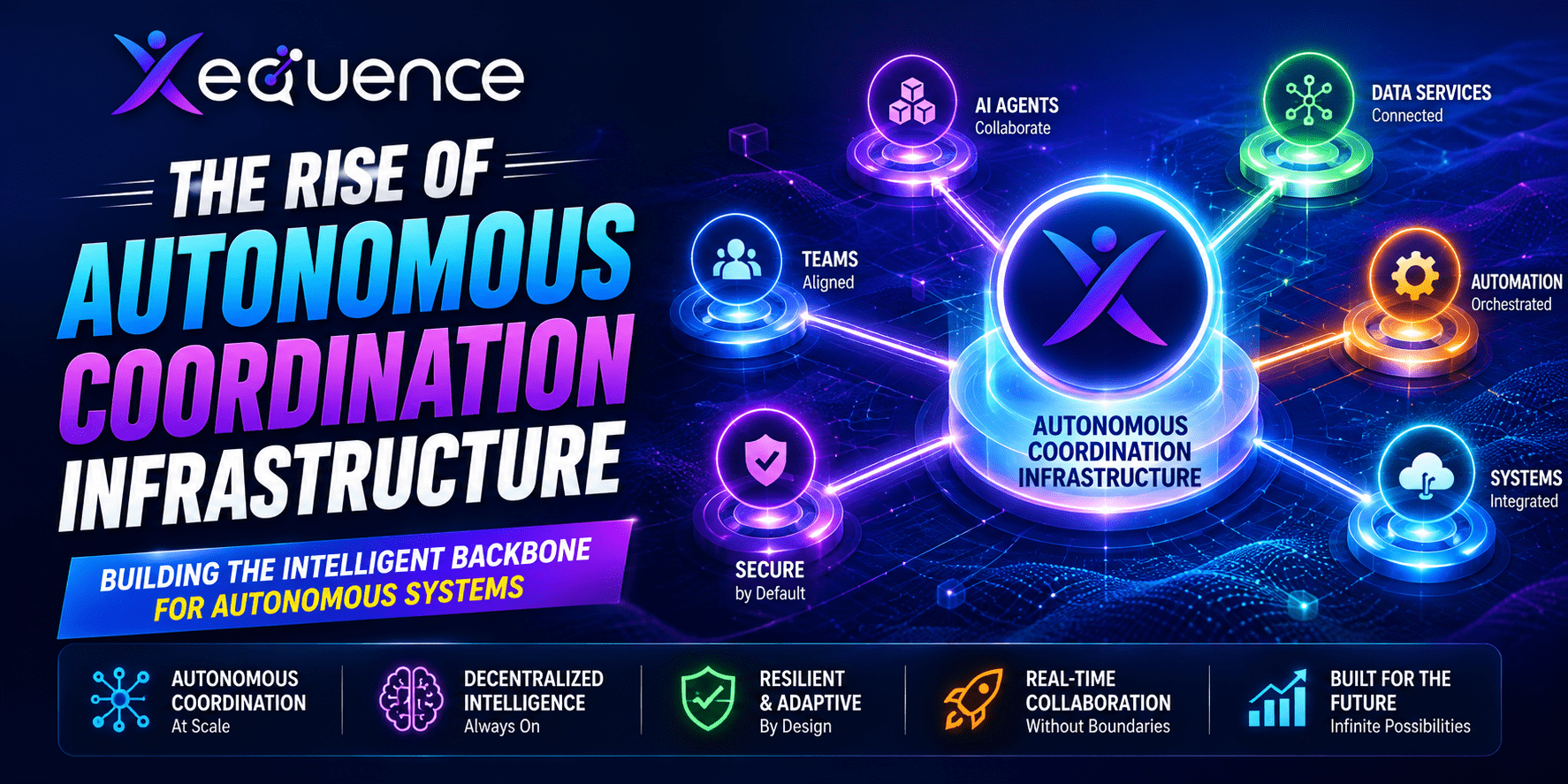
Autonomous Coordination Infrastructure: The Next Evolution of AI
Most companies stumble on the same hard lesson after some time. Growth hardly ever dies from poor thinking. Trouble begins when teamwork gets too costly to maintain. Spreading into new teams, suppliers, rules, buyers, and online spaces pushes firms to build heavier structures. These tools meant to simplify chaos slowly turn rigid. Soon enough, effort shifts from doing work to moving through it. Workers spend time pushing paper rather than making choices; people on the outside feel it through late replies, uneven help, and broken connections between steps. What comes next isn’t just speedier tools—it’s setups that organize themselves without constant oversight.
The Hidden Tax of Organizational Friction
Hidden costs in today’s companies usually do not show up in profit reports. These appear instead as slow paperwork routines – countless small choices stuck in email chains, waiting for sign-offs, matched records, repeated data entry, or shifting between tasks too often.
The symptoms are familiar across industries:
- Multiple stakeholders repeating the same information across disconnected platforms.
- Approval chains that delay execution despite unanimous agreement.
- Manual reconciliation between finance, operations, legal, and customer support.
- Constant meetings whose primary purpose is simply synchronizing information.
- Employees acting as intermediaries between systems rather than solving meaningful problems.
Hidden strain builds inside the framework. Each alert and every worksheet, alongside check-ins, pulls focus, piling up office clutter that quietly wears down output and spirit.
The Battle Between Static Systems and Dynamic Humans
Human behaviour has never been straight. Individuals adjust priorities, make special arrangements, find compromises, face unforeseen situations, and react to uncertainty emotionally. Corporate infrastructure, however, has always been based on predictable sequences with predictable inputs and output. This conflict is then bound to persist between living organizations and static models of coordination.
Legacy decentralized operations attempted to distribute responsibility, but they often decentralized confusion instead. Every department optimized locally while coordination across the enterprise remained painfully manual. Information traveled through people instead of systems, transforming employees into communication bridges responsible for carrying context from one organizational island to another. When companies grew, more connections appeared—soon managing them took up most of the work.
From Manual Workflows to Autonomous Coordination
What comes next for enterprise design changes the whole mindset. Not about speeding up separate jobs, but linking roles through self-managing networks. Without relying on teams to keep things synced, smart setups now handle connections—checking, adjusting, and running them on their own. This shift skips constant oversight by building trust into how parts work together.
When something happens, systems respond without needing someone to press go. Machines act on real data as it arrives, linked through logic that runs itself when criteria match. Rules written in code carry out tasks only after specific triggers occur. Workflows shift from static plans to moving parts, adjusting as events unfold. Once set, actions follow naturally, like dominoes tipped by facts.
Cognitive Relief as a Competitive Advantage
What if the real benefit of self-managing systems isn’t speed at all? It’s how much easier it becomes to think. Companies often judge success by output or slashed expenses, but workers feel progress when their minds aren’t constantly tripping over cluttered processes. Relief shows up quietly, not in reports.
Out of today’s self-running setups comes something familiar—more like the gadgets we use at home than the heavy tools offices run on. Instead of asking users to remember processes, they anticipate intent. Instead of requiring constant follow-up, they coordinate independently. Instead of generating endless administrative checkpoints, they quietly orchestrate activity in the background.
Traditional coordination:
Things often move slowly when teams wait for replies. One person finishes a task before another can start. Paperwork piles up because steps are done by hand. Mistakes slip through when responsibility is split too thin. People keep explaining the same details again and again. Time gets lost sorting out who did what.
Autonomous coordination:
Things stay in sync without needing help. One task passes to another when ready. Checks happen right after changes. Actions start because something triggers them. Work moves smoothly from step to step.
People start focusing more on thinking clearly, coming up with new ideas, connecting with others, and tackling complex challenges—skills machines just can’t mimic. What changes is where energy goes: less routine work, more of what makes us human. Machines handle repetition; humans bring insight. Attention shifts naturally when tools do the predictable parts. Judgment grows stronger when it’s needed most. Creativity thrives once distractions fade. Relationships deepen because there’s time to listen. Problem solving becomes deeper, not faster. Strategy matters more than speed now. The shift isn’t forced—it follows where value truly lies.
Building Infrastructure That Thinks in Networks
Not each deal, task, or contact between parties happens alone—machines see links. Systems built to run themselves view actions as threads in a breathing web of work. When things need to stay reliable, smart contracts make sure they do. Not waiting around, autonomous agents keep checking changes nonstop. Information stays aligned across users because coordination happens across shared systems. Human oversight fades into background as group efforts sync up naturally. Less talking is needed now that structures handle alignment by design.
The architectural implication is significant. What wins now isn’t just moving old tasks online. It’s skipping the back-and-forth entirely. Some companies still shuffle digital paper. Others build ways so nothing gets stuck waiting. Less handoff means less delay. The edge goes to those who design out bottlenecks before they form. Not faster steps—but fewer steps—define progress. Staying ahead means making coordination vanish, not managing it better.
Conclusion: The Infrastructure Behind the Next Era of Business
Now things shift because machines handle connections once left to workers. Old setups recorded tasks but ignored the messy links between them. People spent energy patching gaps instead of moving forward. That friction drained time, sparked annoyance, plus blocked fresh ideas from spreading fast.
What happens when machines handle the mess? Infrastructure stops being passive. It starts making decisions. Less paperwork slows nothing down anymore. Workers feel calmer. Attention shifts from fixing problems to building new things. Software matters less than how well pieces fit together. People gain time because tech handles clutter quietly. Focus returns to invention. Change feels natural. Leadership emerges where burden is lowest. Quiet coordination beats loud control every time.
Recent Posts
Newsletter
Get regular updates on data science, artificial intelligence, machine
You may also like

What Happens When AI Agents Start Working Together?
XequenceAI
July 27, 2026
The Blueprint of Autonomous Operations
Rajib Kar
July 16, 2026
Single AI vs. Multi-Agent AI: A Complete Enterprise Guide
Suraj Kumar
July 8, 2026
Enterprise Operations & Data Silos: The AI Solution for 2026
XequenceAI
June 25, 2026