- Home
- AI Travel Assistants
- The Hidden Cost of Corporate Travel No CFO Talks About
The Hidden Cost of Corporate Travel No CFO Talks About
- June 14, 2026
- Suraj Kumar
- AI Travel Assistants, Business, Gen AI
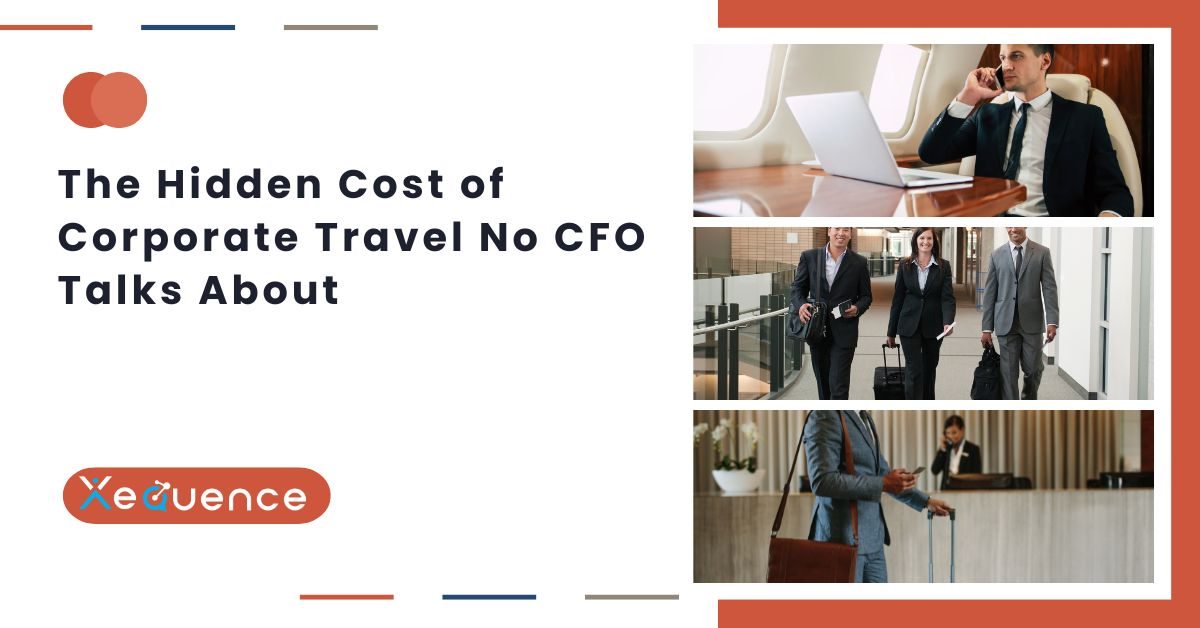
Most of the time, finance heads look at what jumps out—plane tickets, hotels, cabs, food bills, and expense claims. Numbers like these show up clearly in reports, fit into neat boxes, and sit well on spreadsheets. Still, they miss much of what travel actually does to company money. What you see is clean and counted—yet far from complete. The larger cost often remains hidden in plain sight. It exists in delayed approvals, lost productivity, policy disputes, administrative overhead, and employee exhaustion. While accounting systems capture transactions, they rarely capture friction. As a result, organizations frequently underestimate how much value is quietly leaking from their travel programs long before an expense report reaches the finance department. Corporate travel has become a continuous battle between rigid financial controls and unpredictable human behavior. The problem is not that employees refuse to follow processes. The problem is that traditional systems were designed around accounting requirements rather than human realities.
The Productivity Leakage Nobody Measures
A single work journey piles up small jobs no ledger ever shows. Workers check departure times, wait for green lights from managers, shift plans last minute, gather paper proofs, file cost reports, reply to rule checks, fix mismatched totals. Attention leaks into these steps instead of flowing into tasks that bring money in. It’s not about one job alone – it’s what builds up over time. Thirty minutes looking for a proper hotel might feel minor when you’re in charge of sales. Multiply that across hundreds or thousands of travelers over a year, however, and the organization begins sacrificing substantial productive capacity.
This productivity leakage becomes especially problematic because it remains largely invisible. Finance departments can identify a flight that cost $800. They struggle to quantify the three hours of administrative effort surrounding that same booking. Yet from an organizational perspective, both represent real expenses. The result is a paradox: companies aggressively negotiate travel discounts while simultaneously ignoring the far larger productivity losses created by the systems managing those trips.
Burnout: The Silent Multiplier of Travel Costs
Traveling for work gets shown as some big career perk; true? It usually feels nothing like that. Jet-lagged bodies meet delayed flights, endless security lines, and strange hotel rooms. You move across hours with a heavy mind. Staying sharp becomes harder when you are always somewhere else. Home stays behind while meetings pile up.
On top of these expectations, tangled rules pile up fast. Workers must grasp confusing guidelines; keep track of paperwork; explain unusual cases; and yet still handle refunds once back from tough assignments. Starting as mere hassle, it slowly drains mental energy instead. Burnout shows up in real ways. Choices get worse without clear thinking. Engagement falls. Errors increase. Employee retention weakens. Most importantly, the organization absorbs these costs indirectly through lower performance and reduced workforce resilience.
The hidden financial impact emerges because burnout rarely appears under a travel budget line item. Instead, it surfaces months later through reduced productivity, disengagement, and turnover. By then, the connection between travel processes and organizational cost has become difficult to trace.
The Endless Compliance Battle
Travel policies exist for legitimate reasons. It includes shielding budgets, keeping things steady, cutting money-related dangers. Still, plenty of companies somehow turn following rules into an ongoing clash – workers versus the number crunchers. Most old-school setups make it tough for people on trips, piling on rules that just do not match how things actually happen out there. When workers have sudden client talks or almost no flight choices left, they tend to go for what works instead of sticking exactly to policy. From their desk, finance folks must back policies that seem rigid when seen through a traveler’s eyes.
This tension generates administrative noise across the organization. Approval chains grow longer. Exceptions require manual reviews. When conflicts arise, managers often just pass messages back and forth without shaping direction. Instead of studying results, finance teams find themselves watching what people do, step by step. Strange how each team wants the same thing: sensible budgeting. Still, old systems turn teamwork into conflict, making rules feel like weight instead of balance.
Fragmented Data and the Cost of Organizational Blindness
Another hidden drain emerges from fragmented travel data. Booking information lives on one platform. Expense reports reside in another. Corporate card transactions appear elsewhere. Approval histories are scattered across emails, spreadsheets, and disconnected systems. This fragmentation creates a significant visibility problem in corporate travel. Most leaders can see the numbers on paper – yet still miss what drives them. Why certain costs rise stays hidden behind unclear choices. Policies might shape actions, yet proof slips through cracks. Gaps in understanding grow when data lives in separate places. Decisions get made anyway, built on pieces rather than clarity.
The consequences extend beyond reporting challenges. Poor visibility prevents proactive cost management. Patterns remain hidden. Policy violations go undetected until after the fact. Opportunities for optimization are missed because the data required to identify them is distributed across multiple systems. In many organizations, the true challenge is not a lack of data. It is an inability to transform scattered information into actionable intelligence.
From Administrative Noise to Cognitive Relief
The emerging role of AI in corporate travel is often discussed in terms of automation. While automation matters, the more profound benefit may be cognitive relief. Travel feels lighter when machines take over small choices, dig up useful details, and then make rules easier to follow. Old ways of doing things now stand out sharply next to those powered by artificial intelligence
- Starts with a person checking flights by hand. Policy papers get read line by line just to guess what’s allowed. Every coffee receipt must be saved, then typed into forms later. Reports grow slowly, piece by piece, while rules keep shifting. Mistakes pop up often, needing follow-up emails one after another. Each fix takes time, sometimes days, before anything gets approved.
- Smart tools help plan trips by suggesting allowed choices while tracking costs on their own. These systems spot irregularities instantly during the journey instead of waiting. Travelers receive support when making choices even if they do not know the rules well. Guidance appears step-by-step through the process with no need for extra knowledge.
- After money gets spent, workers check what happened – a slow way to handle records. Instead of acting fast, they look back at every purchase by hand.
- Watchful software tracks how money moves, spotting odd behavior early through smart analysis that learns over time. Problems get flagged ahead of time because the system notices small shifts others might miss. Clear warnings appear before issues grow, thanks to constant background checks on financial activity.
The shift is not merely technological. It represents a transition from process-centric management to human-centric management. Instead of forcing employees to adapt to accounting systems, organizations can increasingly deploy systems that adapt to employees.
Conclusion: The Costs That Never Appear on the Invoice
What hits hardest in business trips isn’t usually the ticket, lodging, or dinner. Slowed work, tired staff, rule conflicts, and scattered records pile up behind the scenes. These hidden drags slip past standard budgets because they don’t show on invoices. Yet together, they drain more than any single line item ever does.
Years went by. Firms kept tightening their grip on everyday expenses but paid little mind to the work it took managing those costs. That tilt shifted priorities—travel setups grew better at tracking than serving people. Now machines handle more paperwork smoothly. Finance moves like shopping online does. Suddenly there’s room to question old assumptions about saving money when employees hit the road.
One step ahead, the future of business trips won’t hinge on low fares or tighter rules. Instead, success shows up when companies cut through hassle smoothly. When handled right, handling travel lifts the whole company, not just checks boxes. What changes is how work flows—easier, clearer, and built around people who do it.
Recent Posts
The Rise of Autonomous Coordination Infrastructure: Powering the Future of AI
Rajib Kar
July 10, 2026
Newsletter
Get regular updates on data science, artificial intelligence, machine
You may also like

What Happens When AI Agents Start Working Together?
XequenceAI
July 27, 2026

The Blueprint of Autonomous Operations
Rajib Kar
July 16, 2026

The Rise of Autonomous Coordination Infrastructure: Powering the Future of AI
Rajib Kar
July 10, 2026
Single AI vs. Multi-Agent AI: A Complete Enterprise Guide
Suraj Kumar
July 8, 2026