- Home
- AI in hospitality
- The Hidden Revenue Hotels Are Missing Before Guests Even Arrive
The Hidden Revenue Hotels Are Missing Before Guests Even Arrive
- April 27, 2026
- Rajib Kar
- AI in hospitality, Hotel Management, Hotel Marketing
Are You Losing Hotel Revenue Before Guests Arrive?
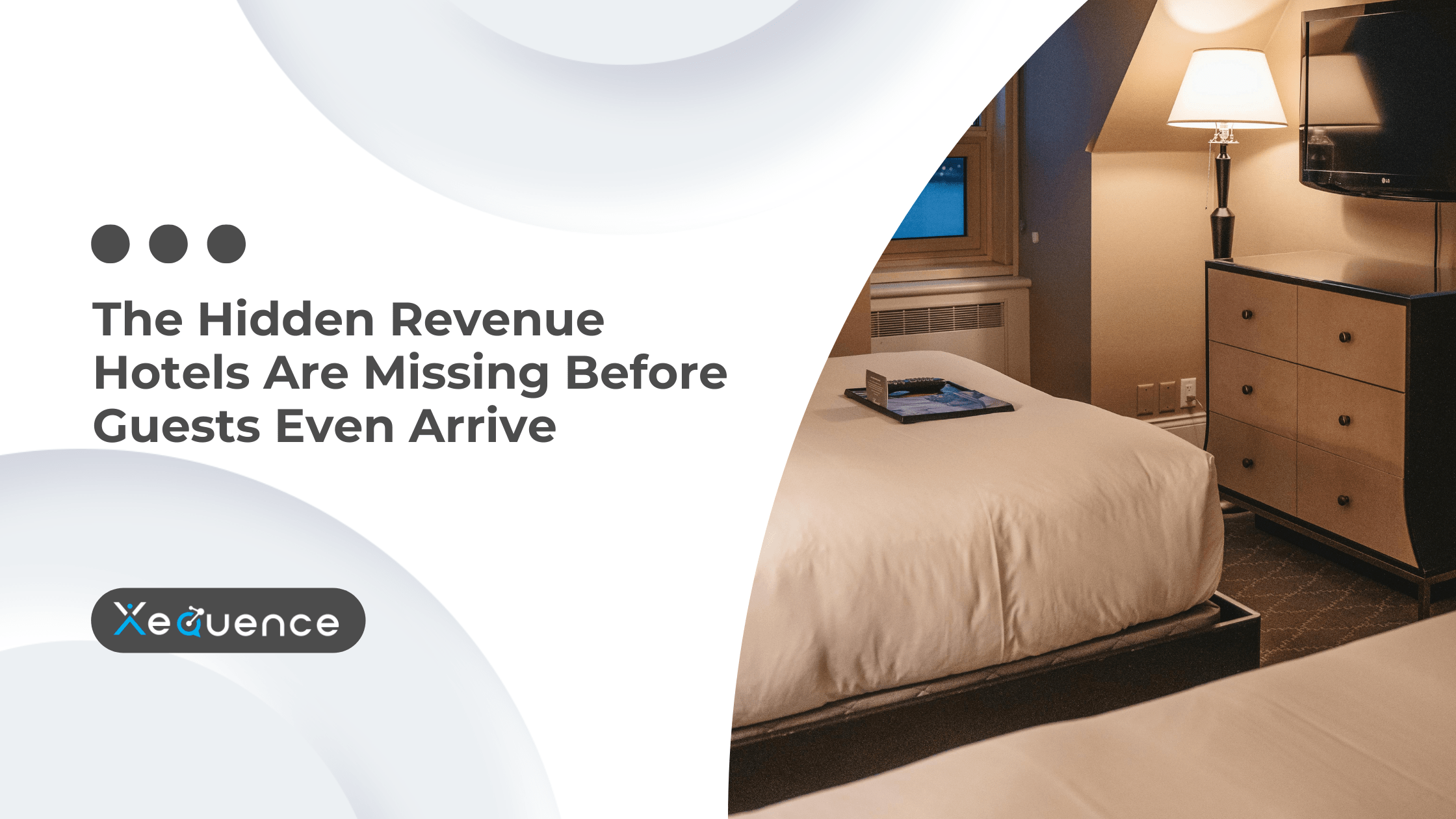
In the hotel industry, the guest journey starts with check in hotel. The most neglected revenue prospects, however, occur much earlier than a guest enters into the lobby. Hotels stand a good opportunity to increase revenue, influence choices, and communicate with the client since the moment a booking is confirmed. Regrettably, a number of properties are concerned with selling rooms and lack pre-arrival strategies that can help them to increase their profits tremendously. Through enhanced communication, customized upgrades, and forging better relationships at an earlier age, hotels can access revenue streams that demand minimal additional effort yet pay off substantially. We will discuss latent opportunities in this blog.
Pre-Arrival Upselling: Small Gifts, Big Impact
Pre-arrival upselling is one of the simplest methods to maximise revenue prior to check-in. When provided with pertinent, appropriate, and timely choices, guests tend to be willing to augment their visit. Hotels do not have to wait until they arrive but can provide personalized offers a few days prior to check-in. These may be in terms of room upgrade, early check-in, late check-out or even items such as breakfast packages, spa treatments or airport transfers.
It all depends on timing and relevancy. Even a generic offer received prematurely, or too late, can be easily overlooked. Still, a timely message, where the preferences of the guest are taken into account, can be helpful but not pushy. Here we go with a few examples,
- A couple who is reserving a weekend hotel could be interested in a dinner and wine package.
- Early check-in or an upgrade of workspace may be appreciated by a business traveler.
- Some additional bedding or activity bundle options can work well in a family.
Hotels that automate this process without forfeiting its personalization will tend to have increased conversion rates. Even the minor upgrades, when multiplied by numerous bookings, will make a big difference to the total revenue.
Smart communication: using email as a source of revenue
Prior communication is usually restricted to confirmation of booking and some reminders. This is an opportunity lost. Each message that is passed to a guest presents an opportunity to interact, educate, and sell without being obtrusive. The distinction is in the manner in which the message is created. Hotels can send confirmation emails that are not plain by:
- Feature upgrades or services.
- Share recommended recommendations (dining, experiences, events)
- Have limited time promotions to generate urgency.
- Give helpful journeys tips that help in building trust.
As an example, a pre-arrival email with the list of the 3 things to be done during your stay and the spa discount leaves both value and incentive. It is essential to be clear and simple. Visitors ought not to be overwhelmed by a number of choices. A short, pleasant message, with either one or two distinct offers is much more effective than a lengthy menu of services.
Quick and direct communications should also be considered by the use of messaging channels that guests already prefer, like WhatsApp or SMS, by hotels. A concise message that follows the right timing may be more effective than a long email.
Fidelity Begins with Pre-First-Stay
Most hotels believe that the loyalty programs start once a guest has been served the first time. In fact, loyalty may begin a lot earlier. The pre-arrival is the ideal moment to inform the guests about the advantages of staying in touch with your brand. Even a mere invitation to be a part of a loyalty program, accompanied by an evident advantage, can be used as an early motivation. Here we go with a few examples,
- Providing a minor discount on extras to members.
- Enabling early access to upgrades.
- Adding such optional extras as free drinks or late checkout.
When the guests believe that they receive an added value, they will be more likely to participate. More importantly, they will tend to spend more. Hotels do not have to have a formal loyalty program to make guests feel a sense of belonging by some personal touches. Before arrival, emotional engagement can be achieved by calling the guests by name, retaining preferences, and mentioning special occasions (such as birthdays or anniversaries). This relationship frequently can be converted into increased expenditure and increased brand loyalty in the long term.
Personalization: The Difference Between Noise and Value
Nowadays, there are numerous offers of various brands provided to guests. The number of offers does not matter; it is the relevance that makes a hotel outstanding. “It is the aspect of personalization that elevates the level of generic message into a more meaningful level, showing that the hotel has knowledge of what the guest requires. Easy methods to make pre-arrival engagement personalized involve:
- Based on the booking information (LOS, room type, travel purpose).
- Keeping a record of previous preferences of returning guests.
- Classification of guests into segments (business, leisure, family, couples).
As for instance, a package deal for the spa may not be suitable for a business customer staying for just one night. However, express laundry or a quiet workspace upgrade could be just what they require. No one wants to give guests too many choices but give a few well-selected ones that will actually improve their experience. Hotels that take time to learn about their customers, even at a rudimentary level, will be much better placed to tap into pre-arrival contacts to generate income.
Conclusion: Making the Waiting Period a Profit
The period between the booking and arrival is regarded as an activity of passively waiting. The fact is that it is among the most effective opportunities that hotels have a chance to use in order to boost revenue and improve the relationships with guests. Hotels can open up new revenue streams that are traditionally unexploited by concentrating on pre-arrival upselling, enhancing communication, loyalty early, and making each interaction unique.
The most interesting thing about all these strategies is that it does not involve significant investments. Even minor increases or decreases, when properly thought and implemented, can result in evident outcomes. Hotels that acknowledge the importance of this step and then take it are not only growing their income. They are preparing the groundwork towards an enhanced guest experience at the onset.
Recent Posts
The Rise of Autonomous Coordination Infrastructure: Powering the Future of AI
Rajib Kar
July 10, 2026
Newsletter
Get regular updates on data science, artificial intelligence, machine
You may also like

What Happens When AI Agents Start Working Together?
XequenceAI
July 27, 2026

The Blueprint of Autonomous Operations
Rajib Kar
July 16, 2026
The Rise of Autonomous Coordination Infrastructure: Powering the Future of AI
Rajib Kar
July 10, 2026
Single AI vs. Multi-Agent AI: A Complete Enterprise Guide
Suraj Kumar
July 8, 2026